
Choosing the Right Marine Battery
Ernie Kucera Jr | 0

Ernie Kucera Jr | 0
We make things that work better and last longer. Our products solve real problems with clean design and honest materials.
When embarking on boating, having the right marine battery with you is one of the things you don't want to skip on your list. Whether you're out on the water for a day of fishing or taking a long voyage, your marine battery is what powers your boat's electrical systems and keeps everything running smoothly.
But how do you choose a marine battery that matches your boat? What are the types of marine batteries available? And which marine battery is the best? These and many other questions are discussed in this blog. You will also learn why it is important to choose Renogy marine battery.
A marine battery is a specialized type of battery designed to provide reliable power in the harsh marine environment. They are an essential component of any marine electrical system, providing power for everything from navigation lights to pumps and motors.
Marine batteries come in various sizes and capacities to suit the needs of different types of vessels, from small fishing boats to large yachts and commercial ships. And with their rugged construction, reliable performance, and long lifespan, marine batteries are crucial for anyone who spends time on the water.
Marine batteries are available in three major types: deep cycle, starting, and dual-purpose. Here is how each of them functions:
Marine deep cycle batteries are a type of battery designed to provide consistent power over a long period. These batteries are typically used in boats and other marine applications where a reliable power source is needed for a prolonged time.
Unlike traditional automotive batteries, marine deep cycle batteries are built to withstand repeated deep discharges, which is important for powering onboard electronics and other equipment.
They are available in various types, including lead-acid, AGM, and lithium-ion deep cycle marine batteries, each with its benefits and drawbacks.

Deep cycle batteries
Choosing the best deep cycle marine battery for your needs requires careful consideration of factors like capacity, voltage, and discharge rate, as well as your budget and the specific demands of your application.
Marine starting batteries are a type of battery perfect for a high burst of power for starting a boat's engine. Unlike deep cycle batteries, which are designed for extended use over a longer period of time, marine starting batteries are built to deliver a quick burst of energy to start the engine and then recharge quickly to be ready for the next start.
They are typically made of lead acid and come in various sizes and capacities to fit different engine types and sizes.
Marine dual-purpose batteries are a type of battery that serves two purposes - starting the engine and powering other electrical devices on board a boat. These batteries are a hybrid of marine starting and deep cycle batteries, providing the high burst of power needed to start the engine while also providing sustained power over a longer period.
While marine batteries are categorized into types depending on their functions, they are also grouped according to their manufacturing methods. This gives birth to lithium, flooded, and AGM batteries.
However, you might be lost in knowing which option is the best marine battery for your boat. Here are what to know about each type:
| Lithium Batteries | AGM Batteries | Flooded Batteries | |
|---|---|---|---|
| Price | $$$ | $$ | $ |
| Long Term Cost | $ | $$$ | $$$$ |
| Lifespan | 15-20 Years | 6-10 Years | 3-5 Years |
| Charge Cycles | 2000+ | 500 | 300 |
| Safety | Safest | Less Safe | Less Safe |
| Maintenance | No Maintenance | Less Maintenance | Most Maintenance |
Lithium marine batteries are a type of battery that uses lithium-ion technology to provide power for marine applications. These batteries are popular for their high energy density, long lifespan, and lightweight design.
Another force that adds to the popularity of lithium batteries in the marine industry is their ability to provide reliable power for both starting and deep cycle applications. However, they are typically more expensive than traditional lead-acid batteries and may require special charging equipment.
On the positive side, lithium batteries for boats offer a high energy density, which means they can provide more power in a smaller package.
Also, lithium batteries have a longer lifespan than lead-acid batteries. This means your lithium battery can serve you longer than other marine battery options. It is also worth mentioning that lithium boat batteries are lighter in weight.
However, there are some downsides to consider as well.
One, as mentioned earlier, lithium batteries are typically more expensive than traditional batteries, and they may require special charging equipment.
Additionally, there have been some concerns about the safety of lithium batteries, although these risks can be mitigated with proper care and maintenance.
Ultimately, deciding on using a lithium marine battery will depend on your specific needs and budget.
A flooded marine battery is a lead-acid battery that uses a liquid electrolyte solution to generate and store energy. These batteries are commonly used in marine applications because they are relatively inexpensive and can tolerate various temperatures and charging conditions.
One of the advantages of flooded marine batteries is that they are more affordable than other types of batteries and can provide reliable power for your boat.
Also, they can withstand different temperatures and don't easily react to charging conditions.
Flooded batteries have their share of cons too.
One, flooded batteries require regular maintenance to ensure they function properly.Two, these batteries can be prone to spills or leaks if not handled carefully. Hence, it is worth considering the long-term costs and benefits before making a final decision.
An AGM marine battery is another option to consider when choosing the best battery for your boat or marine vessel. Absorbed Glass Mat (AGM) battery is a type of sealed lead-acid battery that is also commonly used in marine applications.
Unlike flooded marine batteries, marine AGM batteries do not require regular maintenance and are less prone to spills or leaks. They also have a longer lifespan and can be discharged and recharged multiple times without losing capacity.
There are several advantages to using an AGM marine battery, such as its sealed design that eliminates the need for regular maintenance and reduces the risk of spills or leaks. Also, AGM batteries have a longer lifespan.
AGM batteries are typically more expensive than flooded marine batteries. Hence, it might not be the best for you if you are on a tight budget.
Today, the marine industry is flooded with batteries from different brands. This can make it difficult to know where to start with your search. However, Renogy is a reliable marine battery brand that has bought a name for itself in the marine space.
Renogy batteries for marine are a great battery for your marine use, thanks to their outstanding features. Here are a few reasons to choose Renogy marine batteries:
|
|
|
|
|
|
Battery name |
|||
|
Price |
539.99 (Save $146.00) |
459.99 (Save $240.00) |
899.99 (Save $400.00) |
|
Longevity(Cycle Life) |
≥3500 Cycles @ 80% DoD |
2000 Cycles 80%DOD |
2000 Cycles 80%DOD |
|
Connection Method |
Parallel(Up to 8) |
Parallel(Up to 8) |
Parallel(Up to 8) |
|
BMS Protection |
Advanced BMS |
Advanced BMS |
Advanced BMS |
|
Communication Port |
RS485 |
Bluetooth |
Bluetooth |
|
Waterproof |
IP65 |
IP65 |
IP65 |
|
Application |
yacht, marine, and Van |
yacht, marine, and Van |
yacht, marine, and Van |
|
Warranty |
3 Materials/Workmanship |
3 Materials/Workmanship |
3 Materials/Workmanship |
IP65 waterproof is a rating that indicates that a marine battery is protected against dust and low-pressure water jets from any direction. A marine battery that carries this rating means it can withstand water exposure without being damaged, making it a good choice for marine environments where moisture and humidity are common.
Fortunately, Renogy understands the importance of this rating and hence provides its products with IP65 waterproof.
Another feature that distinguishes Renogy batteries from other batteries is their self-heating ability. Self-heating is a necessary feature for the smooth performance of marine batteries.
Self-heating is a technology that helps keep the battery warm in cold temperatures, which can help extend the battery's life and improve performance. And since boat batteries are used in colder environments, this feature becomes necessary.
Also, Renogy marine batteries come with a smart energy-saving mode, which helps conserve energy by automatically adjusting the battery's power output based on the current load. This feature can also help extend the battery's life and reduce the risk of overcharging or overheating.
Remote monitoring via Bluetooth is another feature that can be found in some marine batteries, and we are proud to equip our batteries with this great feature.
Remotely monitoring your battery allows you to connect it to a smartphone or other device and monitor its status, including its current charge level and any alerts or warnings that may indicate an issue.
This can be especially useful for boaters who want to keep an eye on their battery's health and performance from a distance.
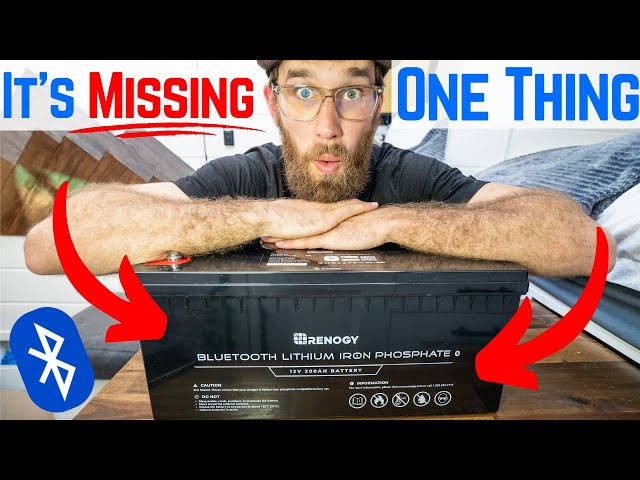
Another reason you want to choose a Renogy battery for your marine adventure is the ability to monitor and control your battery's charging process, thanks to BMS.
The Battery Management System (BMS) is a crucial component of marine batteries. It is responsible for monitoring and controlling the battery's charging and discharging processes and protecting it from overcharging, over-discharging, and other potential issues.
The BMS uses advanced algorithms and sensors to optimize the battery's performance and extend its lifespan, ensuring it delivers reliable power when needed.
A marine battery system typically consists of several components. They include:
Battery: the primary power source that stores energy in chemical form and releases it as electrical energy when needed. This component receives energy from the charger and stores it to release it when you need to power your boat.
Battery Charger: a device that converts AC power from a shore power source or generator into DC power to charge the battery. Once the charger converts AC power to DC, it sends it to the battery to store.
Inverter: the function of this component is to convert DC (Direct Current) power from the battery into AC (Alternating Current) power to run AC-powered devices onboard. While your battery charger converts AC to DC, an inverter converts your battery's DC energy back to AC to power devices that run on AC.
DC-to-DC Converter: a device that converts DC power from the battery into a different voltage or current level to power devices with different power requirements.
Solar Panels: this component converts sunlight into DC power to charge the battery and power onboard devices. A solar panel is usually a plus to a marine battery system, as it ensures you can leverage the sun's energy to power your vessel.
Alternator: a device that converts mechanical energy from the engine into DC power to charge the battery while the engine is running.
Circuit Breakers and Fuses: These components protect the battery and other components from over-current, short circuits, and other electrical faults.
Here are some of our kits to consider for these components:
 |
 |
 |
|
| Solar Kits | 200 Watt 12 Volt Solar Starter Kit | New 200 Watt 12 Volt Solar Premium Kit | |
| Package Includes |
The question of how long a marine battery last has no single answer. The lifespan of marine batteries can vary depending on various factors such as materials, usage, maintenance, and storage. For example, how often you use your battery has a say in how long your battery serves you. Plus, the condition of using your battery will tell how long it lasts.
As mentioned above, we could refer to the comparison table of different batteries, and it can be seen that the battery with the longest life is a lithium battery, which is more than 10-years. It is important to regularly check and maintain your battery to ensure it lasts as long as possible.


